Inria has driven digital innovation and research in France and in Europe for over 50 years.
Set up to act as a bridge between the academic world and industry, Inria is straddling new frontiers in digital research. A pioneer in pushing through new disciplines with their roots in applied mathematics and IT, a pioneer in supporting the dynamism of tech start-ups both in France and across Europe, the Institute has been a visionary and a trailblazer in a range of different fields (computational science, the Internet, the Web).
Today, Inria continues to support the digital transformation of science, the economy, and society as a whole. More than ever, “software is taking over the world”, giving scientists new challenges, opening up new opportunities for tech entrepreneurs, and making it more important than ever to enter into dialogue with society to “make sense of the digital world”. More than ever, Inria is supporting those taking scientific and entrepreneurial risks and research with the biggest possible impact.
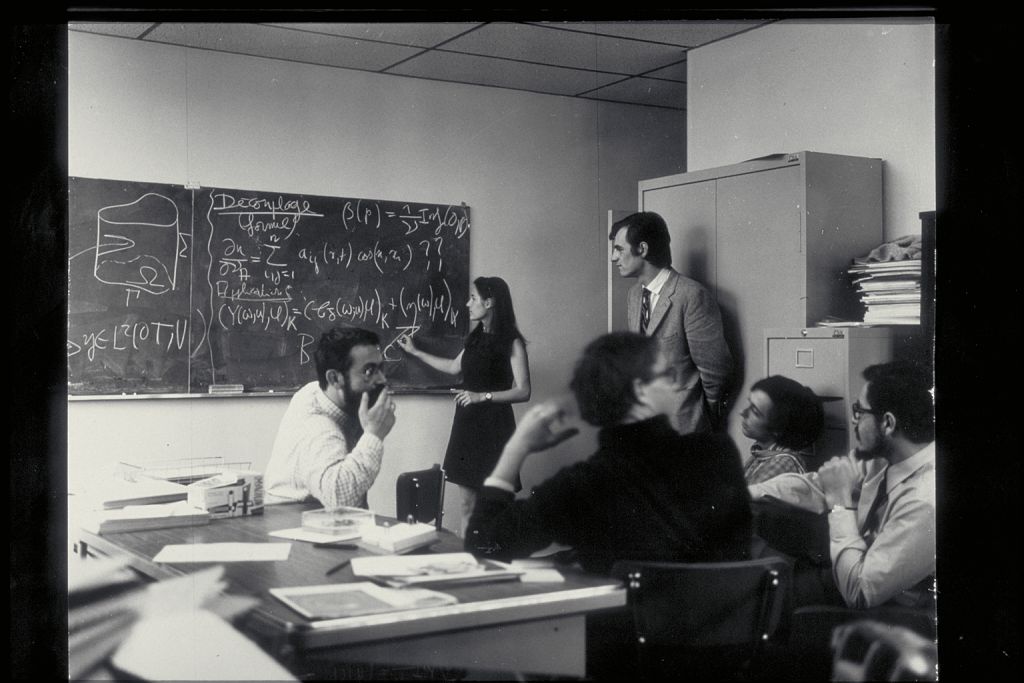
1967-1979, Iria begins to take shape
The aim ?
The aim was to supply France with cutting-edge technology and help the country develop its autonomy and sovereignty.
How?
By drawing on contributions made by French engineers and scientists in the fields of mathematics and computer science.
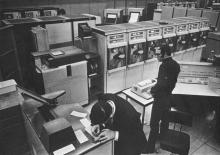
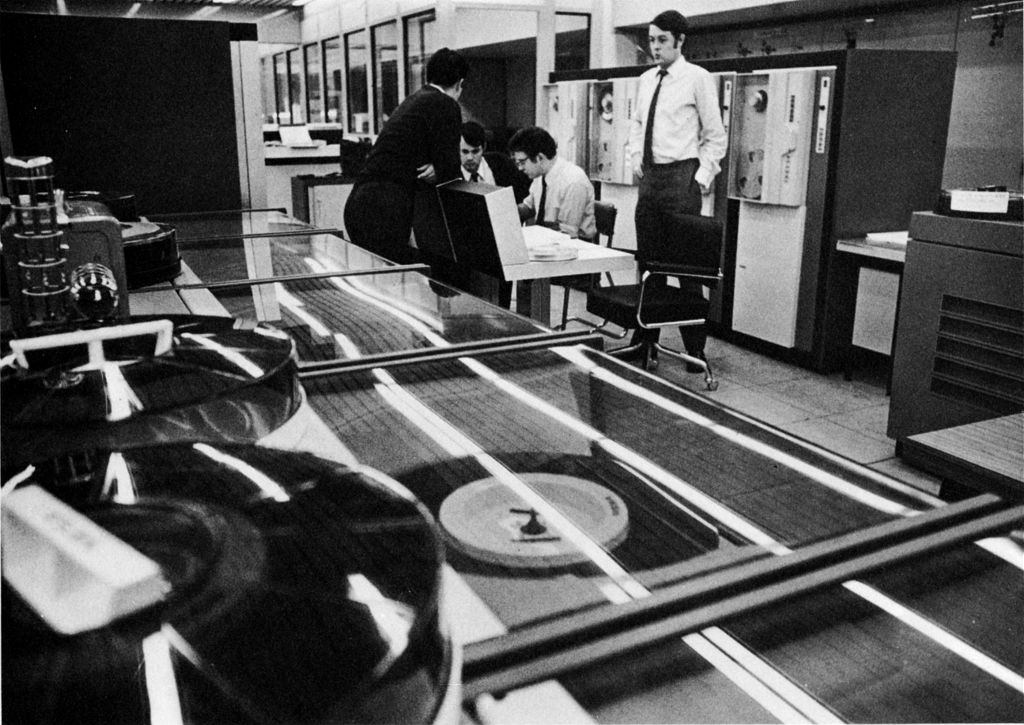
The CII 90-80 computer installed at the IRIA data center
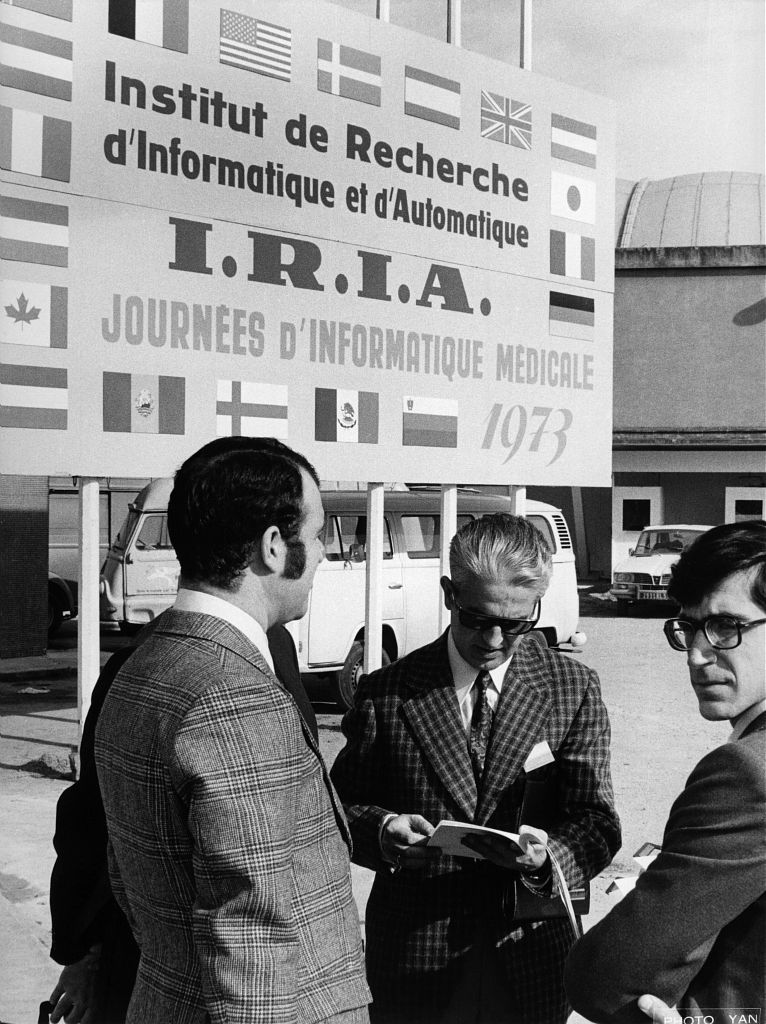
1967, as part of its “Computing Plan”, the French government proudly announced the birth of Iria, the Institute for Research in IT and Automation.
First innovations
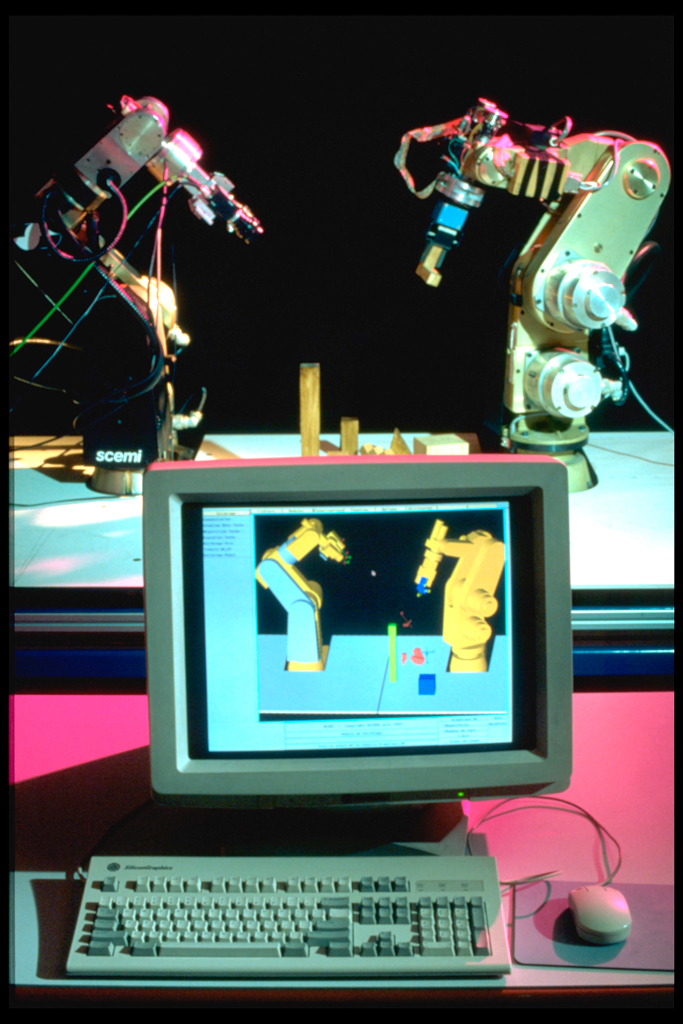
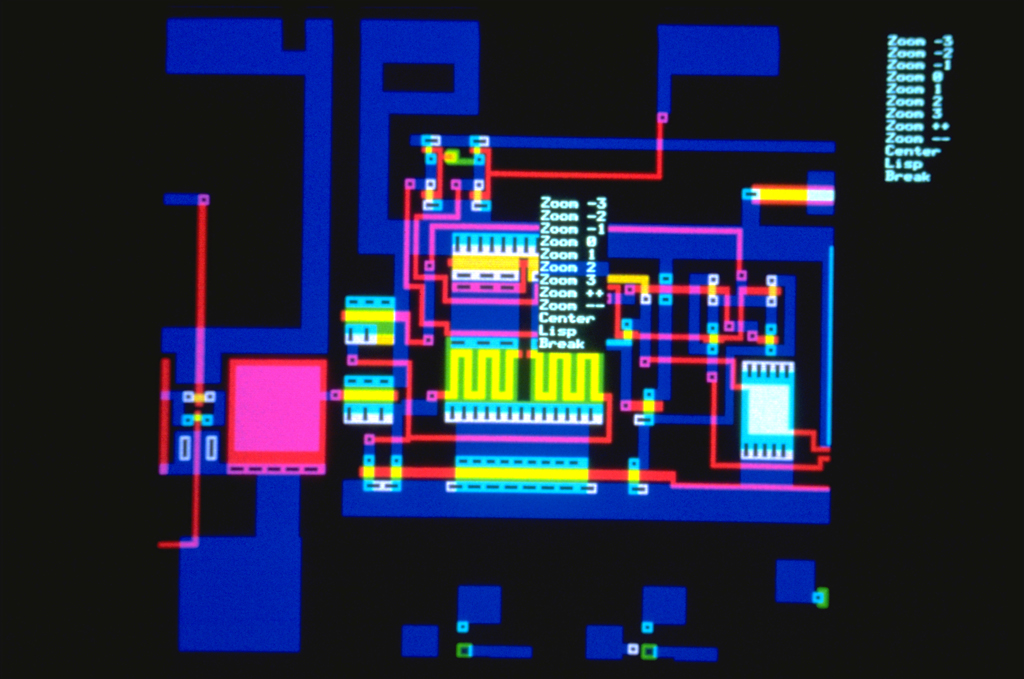
This new type of institute was tasked with forging ties between public research and industry and advancing risky and ambitious projects in science and digital technology. In the 1970s, Iria launched the Micado mission for computer-aided design and drawing, which coordinated research into CAD. The Institute was also tasked with national coordination on a variety of themes including robotics, shape recognition, digital image processing and breakdown prevention.
At the forefront, even before the Internet
If the Internet became the ultra-powerful tool it is today, it is in part thanks to the Cyclades project, carried out in the 1970s at Iria. That’s right - by exploring innovative solutions for networking computers together, Inria researchers invented packet switching for data transfers. At the time, presentations in France, Europe and the USA put Iria among world leaders in the field. Sadly, the programme was suspended in 1976 for political reasons.
Early signs of the Internet at Inria
1974: a key year in the history of the Internet
1974 was the year Vint Cerf and Robert Kahn published their seminal article on TCP (Transmission Control Protocol), A Protocol for Packet Network Intercommunication (IEEE Transactions on Communications, Vol Com-22, No 5, May 1974). The article was the end result of a research program carried out on the Arpanet since 1964 under the auspices of DARPA (Defense Advanced Research Project Agency), an agency of the US Department of Defense, with European contributions from research centers in UK, Norway and France (in chronological order).
The Cyclades project hosted by IRIA was launched in 1972. IRIA’s contributions by Louis Pouzin, Gérard Le Lann and Hubert Zimmermann were quickly incorporated into the work that led to the transition from the Arpanet to the Internet.
Moreover, Mitranet was the anglicised name given to Cigale, the packet-switching sub-network used in Cyclades. A datagram (which owes its name to a Norwegian engineer) is a “universal packet” format supported by the heterogeneous networks which constitute the Internet, the basis for the IP protocol.
The Arpanet’s NCP protocol, the alternating bit protocol, and the Cyclades’ STST protocol are the predecessors of TCP, which provides reliable , and ordered “end-to-end” deliveries of messages between applications running on equipment connected to the Internet.
DARPA chose 1st January 1983 as the day when all Arpanet sites (and sites belonging to networks based on Arpanet technology) would replace NCP with TCP/IP. The Internet was born.
The aim of the ambitious Spartacus programme, meanwhile, carried out in conjunction with the Inserm, CNRS and CEA, was to develop a system that would enable tetraplegic people to recover their independence. The robot they developed contributed a whole host of innovations, but was judged too heavy, too bulky and too expensive to be of any use to disabled people, and instead ended up being used in industry.
sdcsdcdcscsc
1979 - Iria with a capital “N”
Briefly threatened by decentralisation (there was talk of the Institute being moved to Sophia Antipolis), the director at the time, Jacques-Louis Lions, was able to keep the Institute in Rocquencourt, transforming it into the National Research Institute for Computer Science and Automation.
Inria was able to expand both geographically and economically. Beginning in 1975 with the launch of the Irisa (Institut de recherche en informatique et systèmes aléatoires - The Institute for Research into Computer Science and Random Systems) in Rennes, decentralisation saw three new research units set up, bolstering the Institute's national reach. Inria first set up camp in Sophia Antipolis in 1983, then in Nancy in 1986 and Grenoble in 1992.
What was this territorial expansion designed to achieve?
To attract young researchers from across France and overseas. Inria established a range of academic and industrial partnerships, a model it would stick with going forward. The Institute formed ties not only with Grandes Écoles and universities (the École Polytechnique Fédérale in Lausanne, the Centrum Voor Wiskunde en Informatica in the Netherlands, the Max Planck Institute in Germany, etc.), but also with smaller companies and a dozen or so major groups, both from France and overseas (France Télécom, then Orange; Alcatel-Lucent, then Nokia; Thalès, Alstom, EDF, etc.)
1984 - The first start-up and the first venture capital fund
1984 saw the beginning of a new chapter in Inria’s history, with the creation of the Institute’s first subsidiary company, Simulog. This was the first of what would later be known as tech start-ups: over the course of the next 30 years, more than 160 start-ups would be launched, all supported by Inria!
In order to fund their development, which is always a risk, in 1998 the Institute set up I-Source, France’s first tech venture capital organisation, ever true to its reputation as a trailblazer. That same year, the Institute also set up Inria Transfer, a spin-off that would go on to become IT-Translation in 2011, which would be tasked with supporting future entrepreneurs. For its investments, Inria Transfer formed a virtuous circle, using funds raised from selling shares in start-ups that began life within Inria. This was how Inria Startup Studio came about, launched in 2019 in order to help Inria meet its ambitions to support 100 start-up projects each year from 2023 onwards in a world where digital innovation continues apace.
1995 - Inria, host of the W3C
The Web is 30 years old!
Created at CERN (the European Organisation for Nuclear Research) in 1989 as an information management system for researchers, it developed over the course of the 1990s, supported by a network of companies and research centres: the World Wide Web Consortium (W3C). Inria was a stakeholder in this, becoming its European host in 1995.
In 1996, the Institute organised the fifth International World Wide Web Conference in Paris. A few months later, Jean-François Abramatic, director of research at Inria, was named president of the W3C.
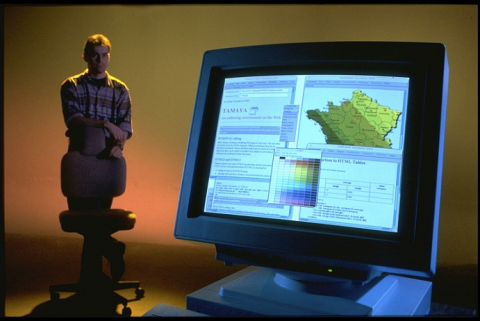
For example, by inventing CSS (Cascading Style Sheets) and creating the Web browser/editor Amaya. For a number of years, this was the most widely used browser/editor, evolving automatically by implementing the Web standards published by the W3C.
1998 - Getting stuck into the Web
The 1990s saw the remarkable rise of the Web and, as you would expect, Inria was right in the thick of things. It was the Institute, for example, which was entrusted with managing national domain names for France, with the creation of “.fr”. In 1998, once the technology had matured, Inria created a spin-off in the form of the AFNIC (the French association for cooperative internet naming).
W3C, an adventure with global impact
30 years of the web: a new phase for the Web in which Inria will play its role in serving a numerical ambition for France and Europe.
Bruno Sportisse, CEO of Inria and president of the W3C Europe hub
Another global breakthrough came in 1995, when the Institute was selected by MIT as a partner within the W3C (World Wide Web Consortium), which is responsible for standardising web technology, becoming leader of the European hub.
In order to handle all of these projects, Inria grew through the ambitious plan overseen by Bernard Larrouturou, who committed the Institute to doubling in size: the five existing research centres were joined by centres in Bordeaux, Lille and Saclay (2008).
The Institute currently has 2,600 individuals on the payroll, with more than 3,500 scientists involved in its 200 versatile project teams, most of which are joint undertakings with universities and research bodies.
In early 2000, the Institute revealed its technological and scientific vitality in ever more varied fields. Inria moved into health (one quarter of its project teams), beginning to devise an interdisciplinary strategy that would become its hallmark. Meanwhile, the Institute played its part in a range of ground-breaking projects, helping to “get things going” and to renew France’s vision for innovation.
Inria is committed to...
Inria entered into a partnership with Microsoft Research in2006, for which it earned its fair share of criticism, but stuck to its guns, feeling the opportunity to work with a global leader was too good to pass up.
In 2009, Inria launched a programme for joint laboratories with SMEs, which would be used as a prototype for the Labcom programme led by the National Research Agency (NRA).
From the outset, Inria has been central to the French Tech initiative, the goal of which is to boost French entrepreneurship.
To be a pioneer, to take risks and to create value both for society and the economy
Unsurprisingly, Inria supported the FUN (France université numérique) platform from its very beginnings, supplying its technological infrastructure in order to boost the growth of MOOCs in France.
In recognition of the vital role played by the Institute, in 2018 it was granted the status of coordinator for the research component of the national plan on artificial intelligence, AI for Humanity.
Platform FUN
Excellence in higher education for free online courses open to all.
AI for Humanity
Artificial intelligence at the service of humans.
2012 - Inria creates Inria Chile, its first centre outside of France
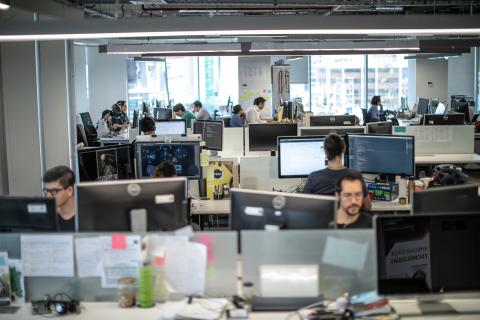
In order to serve as a point of entry for France into Latin America, Inria established the Inria Chile Centre in 2012. Its first project was the CIRIC Centre of Excellence (Communication and Information Research and Innovation Center), a collaborative effort with nine Chilean universities and support from the Chilean agency Corfo (Chilean Economic Development Agency) through the "Attracting International Centres of Excellence for Competitiveness" program.
How did Inria arrive in Chile?
In 2022, ten years after Inria's arrival in Chile and the creation of Inria Chile, three figures from the Chilean academic, scientific, and innovation ecosystem tell the story of this venture, which began to take shape in 2009. Watch the testimonials of Rafael Correa, José Miguel Piquer, and Thierry de Saint Pierre.
2016 - Inria opens its doors to software
In much the same way, Inria has also played a pivotal role in the spread of freeware in France and in Europe, as one of the first institutions to understand its role in the digital revolution. By way of an example, Inria invested in the definition of free licenses, with the CECILL license, which also enabled it to dip a toe into the waters of the legal issues facing freeware. More recently, there was the Software Heritage project, the aim of which was to build a universal and permanent software source code archive. Having opened to the public in 2016, this “Library of Alexandria” for software housed no fewer than 6 billion source files and 90 million software projects. After playing a crucial role in the birth of HAL (Hyper articles on ligne), an open online platform developed in 2001 by the CNRS where authors can deposit scientific publications, Inria is now looking to build the third pillar of open science, software, following on from publications and data.
2022: 10 years of Inria in Chile
Following its entry into a new strategic cycle in 2019, Inria celebrated a decade of uninterrupted operation in Chile in 2022, always with the support of the Chilean government—through Corfo and later the Ministry of Science, Technology, Knowledge and Innovation and the ANID agency—and the French government. Inria Chile thus consolidated its position as a vital bridge between Europe and Latin America in the field of science and technology.
During the 2019-2022 period, Inria Chile focused its efforts on maintaining scientific excellence, leading cutting-edge scientific projects in artificial intelligence, such as the OcéanIA project, an interdisciplinary Franco-Chilean project that seeks to unravel the Ocean and its role in mitigating climate change. In innovation, it launched the Inria Startup Studio program in Chile, with a formula adapted to the Centre's specific identity in Chile, and the Inria Academy technology training program. These programs are complemented by programs that have structured Inria Chile's work to date and have increased its impact on the Chilean ecosystem, such as the Research Internship Program at Inria in France, the Associate Teams Program, and the Summer Internship Program at Inria Chile, among others.
Inria Chile celebrates its 10 years and publishes the book “Inria, a decade in Chile”
In November 2022, Inria Chile celebrated its 10th anniversary in the country. This event, held at the La Moneda Cultural Center, brought together Chilean and French authorities, representatives from universities, research centers, companies, and public and international institutions. At the event, Inria Chile presented four white papers on the Internet of Things, Cybersecurity, Artificial Intelligence, and Digital Agriculture, and launched the book “Inria, a decade in Chile,” which details the work carried out over the past decade and Inria Chile’s contributions to Franco-Chilean cooperation and Chile’s technological development, particularly in digital science and technology.
Inria and the Ministry of Science, Technology, Knowledge and Innovation of Chile, create the Franco-Chilean Binational Center on Artificial Intelligence
Today, Inria Chile is a driving force behind cutting-edge research, technological innovation, and knowledge transfer. It works closely with universities, companies, startups, and public and international institutions to address the major challenges of the digital revolution, with a firm commitment to scientific excellence, technological sovereignty, and social impact.
Inria Chile also operates the Franco-Chilean Binational Center on Artificial Intelligence, created following the Strategic Cooperation Agreement signed in November 2024 by the Chilean Ministry of Science, Technology, Knowledge and Innovation and Inria within the framework of a strategic approach to bilateral cooperation and in the presence of the presidents of both countries.
The mission of the Binational Center is to promote Franco-Chilean cooperation in the field of Artificial Intelligence (AI), catalyzing and growing their ecosystems of research, training, innovation, and entrepreneurship in AI. In turn, the Center serves as a geostrategic bridge connecting European excellence, led by France, with the dynamism of Latin America, with Chile as a regional hub.